


Tools to help reduce food waste this holiday season

Close up of plate of food including a turkey leg, sweet potatoes, mashed potatoes and greens.
Photo by Fred Zwicky, © 2024 Board of Trustees of the University of Illinois Urbana-Champaign.

It’s the fall and winter holiday season, and the downside of upcoming festivities is the amount of waste they entail, especially food waste. When we waste food, we also waste the resources that went into its production (e.g., water, land, energy, labor, etc.), and contribute to the generation of greenhouse gas (GHG) emissions, such as methane. Wasted food causes 58% of methane emissions from municipal solid waste landfills (U.S. EPA, 2023). Wasted food also means wasted money; according to the U.S. Environmental Protection Agency (EPA), the cost of food waste for each U.S. consumer is approximately $728 per year, or an average of $56 per week for a family of four. With increasing prices for groceries, it’s even more important that prevent food waste whenever possible.

The following tools and resources will help you reduce food waste associated with your holiday celebrations and hopefully help you establish new habits to prevent food waste year-round. As always, please keep in mind that links to specific products or services are provided for informational purposes only and do not constitute endorsement by ISTC, the Prairie Research Institute, or the University of Illinois.

Meal planning

  • The Guest-imator from the Natural Resources Defense Council (NRDC) Save the Food website is an interactive calculator to help determine the right amount of food to prepare for a party. You can enter the number of guests based on whether they’re light, average, or big eaters, and even factor in how many leftover meals you’d like when the party’s over. That’s great if you’re the type of person who likes to cook extra food for holiday gatherings so you can send home care packages of leftovers with your guests. You can then choose the style of meal (vegetarian, classic dinner party, or a little of everything smorgasbord), input details on the types of entrees, sides, and desserts you want to get measurements such as the number of pounds of meat to prepare, the ounces of veggies to cook for sides, the number of pies to makes, etc. based on the parameters you’ve entered. Note that for whatever reason, clicking on “Finalize the menu” button does nothing (regardless of the browser you’re using); however, once you’re at the point to add or subtract mains, sides, and desserts, the measurements you’ll need will update on the table graphic at the top of the page with each addition or subtraction. Just scroll back up to see the new information.
  • Utah State University Extension—Meal Planning. This website guides you through the process of assessing what you already have in your pantry, thinking about your meals for the week, and creating a grocery list. It also includes free printable templates for planning nutritious meals and creating relevant shopping lists, and describes free meal planning apps for your phone to make planning simpler.

Proper storage & food safety

  • Store It. A key strategy for preventing food waste is storing your ingredients and leftovers properly to keep them viable for as long as possible. This section of the NRDC Save the Food website provides information on how to store a wide variety of foods, including when and how to refrigerate, how to freeze, and tips for using up the last bits of a given ingredient.
  • FoodSafety.gov (U.S. Department of Health & Human Services). In particular, check out the Cold Food Storage Chart and the FoodKeeper App to learn about proper storage of different foods and ingredients. The FoodKeeper App is also available for Android and Apple mobile devices. Further, this website provides resources for keeping food safe by event and season. Following these guidelines can help prevent food waste caused by improper preparation or storage practices. Explore the downloadable guides for cooking for groups, guidance for parties and buffets, Thanksgiving and Winter Holidays, and more.
  • Oregon State University Extension Service Home Food Preservation. Scroll through this website for a wealth of guidance on freezing, drying, pickling, canning, and more to preserve ingredients and various foods prepared at home (since holiday meals often generate leftovers).

Get creative

Sometimes the best strategy to prevent food waste is to find inspiration on how to use an ingredient in a new way, use up a surplus of a given item, or repurpose leftovers in a new dish. The following websites and tools will help you create meals based on what you have on hand.

The 5 Ways website suggests using canned beans as a substitute for half of the fats in baked goods like brownies and cookies to use them up and add protein to treats. Photo by Andrei Starostin– stock.adobe.com (Education license, University of Illinois Urbana-Champaign).
  • 5 Ways With Commonly Wasted Foods. This section of Canada’s Love Food Hate Waste website allows you explore new options for using various ingredients. Images of items are presented with a list of 5 different uses. Click on any image for details, which include links to specific recipes. You can also explore the “Recipes” section of the website to search for items you have on hand that might not be featured on the “5 Ways” page.
  • Food Hero. Another excellent resource from Oregon State University Extension, this site provides a database of recipes, resources to help celebrate the food of different cultures, gardening tips, and other guidance to support a healthy lifestyle. You can search their resources by ingredient to find recipes, videos, and other inspiration for items in your pantry or fridge.
  • Of course, you can always just perform an Internet search for your available ingredients, but you might be overwhelmed by the number of search results. Check out these additional recipe database sites to help you find what you’re looking for more easily. Many of these are also available as apps for your phone.
    • Supercook. Use the dropdown menus to select multiple ingredients at a time.
    • MyFridgeFood. If you’re a creative chef, this site not only allows you to search for recipes based on what you have, but also to submit recipe ideas to assist others.
    • Cookpad. Similarly, you can search and share your own recipes. You can search without creating a free account, but need one to submit recipes.
    • Cookin’ With Google. This is a Google Customized Search engine that lets you input multiple ingredients and find relevant recipes.
    • Use Up Leftovers. Enter three ingredients and get results from a database of over a million recipes. Don’t worry about being overwhelmed; the results will consist of the five best matches from the database.

Happy holidays and good luck whittling down your food waste!

Learn more

Holiday gifts to foster climate action

Photo by Fred Zwicky / University of Illinois Urbana-Champaign

Whichever winter holiday(s) you observe, you’re likely considering showing your appreciation for loved ones through gifts as part of your celebration. It’s worth noting that consumerism has real consequences for climate change, as outlined by Renée Cho on the Columbia Climate School’s blog, State of the Planet. Last holiday season, we outlined holiday gifts with sustainability in mind, including some ideas that didn’t involve consumption, such as giving experiences and donations to charity. This year, we’ll highlight gift options that, despite involving consumption, may help the recipients reduce emissions of greenhouse gases or otherwise foster climate action. Please note that links and companies mentioned in this post are for informational purposes only, and should not be construed as endorsements by ISTC, the Prairie Research Institute, or the University of Illinois.

Food waste reduction

US EPA infographic on the climate impacts of food waste.  It states up to 40% of food is wasted in the US and lists emissions impacts throughout the lifecycle of food.
US EPA infographic on the climate impacts of food waste.

The US EPA estimates that up to 40% of food is wasted nationally, and greenhouse gas emissions occur throughout the food production, distribution, and disposal process. Thus, wasting food contributes to climate change, and each year the emissions caused by wasted food are greater than the emissions from all domestic flights in the US plus all international flights run by US airlines. Here are just a few gift ideas that might help the recipient waste less food:

  • Check out The Original Green Pan’s guide to 10 Sustainable Cookbooks to Help You Reduce Food Waste for ideas for using up items that may often be disposed of as scraps. The foodie in your life might appreciate one of these volumes.
  • Make sure your recipient has the URL for Save the Food’s Interactive Storage Guide (https://savethefood.com/storage) with tips for proper storage of various foods, and consider adding a set of clear glass storage containers. Being able to see the food stored in your refrigerator provides a visual prompt to use it up, hopefully avoiding the cliché of an unrecognizable moldy mess in an opaque container at the back of the fridge.
  • A marker and some label tape can help your recipient keep track of when they stored various items, so they’re more likely to eat older items first before spoilage. You could even print off the US EPA’s “Eat First” sign and suggest they keep a bin in their fridge for produce and containers that need to be used up first.

Composting

US EPA infographic showing the benefits of composting and how it impacts climate change.
US EPA infographic explaining how composting decreases GHG emissions, sequesters carbon, and improves soil health and resilience.

For unavoidable food scraps, such as eggshells, bones, peels, etc., it’s still better for the climate if you can compost instead of sending those to a landfill. Here are a few suggestions for helping your loved one compost their food scraps:

  • Check out the Illinois Food Scrap and Composting Coalition (IFSCC) list of residential food scrap haulers and food scrap drop-off locations. If your recipient lives in a part of the state where commercial food scrap composting is available, consider a gift card or paying for a trial month or two for a pickup service or providing information on drop-off bins and an offer to help them transport their scraps to the drop-off location. Giving the gift of trying out composting services might help your loved one form a positive habit.
  • If they don’t live in an area where composting services are available, or if they’re more of a DIY-type, check out IFSCC’s resources on composting at home through a backyard bin, worm bin (vermicomposting), or bokashi (using micro-oganisms in an airtight container). The Strategist’s list of The Very Best Compost Bins provides suggestions for countertop food scrap collection (before transporting to an outdoor bin), as well as gear for worm composting or bokashi. This Green Lunchroom Challenge post on home composting includes links to YouTube videos with tips for simple home composting, even if your recipient is an apartment dweller.

Energy efficiency

Gifts that help your recipient save energy can reduce their use of fossil fuels and avoid greenhouse gas emissions. Here are just a few ideas:

Raising awareness and hope

While most people have heard about climate change, not everyone may feel knowledgeable about it or feel they have enough of a handle on how they can make a difference. These items can help your recipient learn more and feel empowered:

  • Daybreak board game. A potential option for a family gift, this is a “cooperative boardgame about stopping climate change. It presents a hopeful vision of the near future, where you get to build the mind-blowing technologies and resilient societies we need to save the planet.” The game is for 1-4 players, ages 10+, and takes 60-90 minutes to play.”
  • Saving Us: A Climate Scientist’s Case for Hope and Healing in a Divided World by Katherine Hayhoe is a book that helps readers learn how to talk about climate change with anyone, even those who may hold very different worldviews from them. Dr. Hayhoe suggests that talking about climate change and making human connections, without focusing on changing minds, is an effective way to inspire action.

Additional resources

Holiday gifts with sustainability in mind

Alma mater and block-I shaped cookies on a plate among other cookies
Illinois-themed Alma Mater and Block I holiday cookies. Credit: UI Public Affairs, Fred Zwicky.

Whichever winter holiday(s) you observe, odds are ‘tis the season for gift giving. Even if you don’t observe any of the major winter holidays, you’ll surely think about gifts at some point in the near future to celebrate a special occasion. If you’d like to align your gifts with sustainable values, the following ideas and resources might be helpful. Please note that links and companies mentioned in this post are for informational purposes only, and should not be construed as endorsements by ISTC, the Prairie Research Institute, or the University of Illinois.

Give an Experience

Many of us are fortunate enough to have plenty of “stuff” already, and if that’s the case for your intended recipient, consider an alternative to giving them more material goods. Experiences can often be more meaningful and personalized than physical gifts and presenting them can be an opportunity to start a conversation about consumption and its impacts on resource use, though one should not equate gifting experiences with avoiding consumption. Experiences still involve the use of material goods and consumption of resources; e.g., cooking someone their favorite dinner still requires the use of cookware, energy, and ingredients that themselves require natural resources to grow, raise, or manufacture. However, some gifted experiences may use items or resources that you or your recipient already own or would consume regardless of the special occasion. Continuing the previous example, you’re not likely to buy new pots or appliances to cook dinner, and since your recipient would need to eat anyway, there would always be impacts associated with the ingredients for the meal. Of course, other experiences may involve situations outside normal day-to-day circumstances that necessitate the use of resources (e.g., fuel for travel) we would not otherwise consume. Taking a spouse on a dream vacation or treating your best friend to a concert performance by their favorite band are examples. In such instances, it’s important to remember that giving an experience is less about avoiding resource use than shifting human attitudes and focus. The goal when gifting an experience is not to completely avoid consumption–we all consume resources as part of being alive. Rather, giving an experience shifts the focus away from material items as ends in themselves toward human interactions and the associated memories that will endure longer than most physical gifts possibly could. Memories are durable gifts! As a person who cares about sustainability, you can still try to incorporate responsible consumption into the equation if possible—perhaps by using local, sustainably harvested ingredients for the special dinner you’re preparing, buying carbon off-sets for the travel to that dream destination, or taking public transportation to the concert. The key is sharing or fostering experiences fulfills the human need for authentic connection rather than human desires for material goods, and reinforces the idea that relationships matter more than stuff. Valuing relationships between living things (in this case between people) is essential to thinking about ecosystems and the mindset that humans are a part of, rather than apart from, the rest of the natural world. Valuing relationships/connections can build a foundation for more sustainable behavior.

Give to Charity

Another option is to make a donation in honor of your loved one to a charitable organization that resonates with their interests and values. If you aren’t already aware of a specific group dear to their heart, you can search Charity Navigator at https://www.charitynavigator.org/ to find organizations by cause. The results display ratings, if Charity Navigator has adequate information to calculate one, based on “the cost-effectiveness and overall health of a charity’s programs, including measures of stability, efficiency, and sustainability.” You can filter the results by ratings, different aspects of performance (called “Beacons” on the site), state, organization size, and other factors. For example, I entered the term “sustainability” into the site’s search bar with the state filter “IL.” Charity Navigator also produces curated lists of charities, including “Where to Give Now,” “Popular Charities,” and “Best Charities.” As examples, check out the List of Best Women’s Charities, the “Where to Give Now” list for the Hawaii Wildfires, the List of Most Popular Charities. You can of course always enter keywords into Google or another search engine, but you might appreciate having Charity Navigator do some of the virtual “leg work” for you and having their expert analysis.

Note that your donation need not be monetary—you could donate your time or skills through volunteering. You might use your social media experience to help with promotion and online engagement for the literacy program for which your wife works, for example. You might even combine supporting a good cause important to your loved one with gifting an experience. For example, you might arrange to volunteer with an animal-loving friend at the local Humane Society shelter or pick up litter with your dad at his favorite nature preserve.

Give Gifts that Foster Reuse and Waste Reduction

Maybe you want to give your favorite waste reduction wonk items to help them get closer to the ideal of zero generation, but all you can think of are reusable coffee cups and cloth grocery bags which you know they already own. Here are some ideas and lists from which to draw inspiration.

Give Gifts that Reduce Dependence on Fossil Fuels

Friends don’t let friends rack up avoidable greenhouse gas emissions. Consult the following guides for some quick tips.

Give Gifts Free of PFAS

According to PFAS Central, a project of the Green Science Policy Institute, “PFAS, sometimes referred to as PFCs or highly fluorinated chemicals, are used in many consumer products and industrial applications because of their oil-, stain-, and water-repellent properties. Examples of chemicals in this class include PFOA, PFOS, and more than 3000 related compounds. The most studied of these substances is a chemical called PFOA, which is linked to kidney and testicular cancer, elevated cholesterol, decreased fertility, and thyroid problems and decreased immune response to vaccines in children. The most studied of these substances is a chemical called PFOA, which is linked to kidney and testicular cancer, elevated cholesterol, decreased fertility, and thyroid problems and decreased immune response to vaccines in children.” PFAS persist in the environment and pollute even the most remote places. Check out ISTC’s information and work on PFAS. This recent video from Bloomberg tells the fascinating story of how one woman uncovered how PFAS pollution became prevalent in her area.

So, these substances are clearly bad news for human and environmental health, but they’re in lots of consumer products—how can you help friends and family avoid exposure? Check out https://pfascentral.org/pfas-free-products/ for a list of PFAS-free outdoor gear, apparel, shoes, personal care products, baby gear, furniture, food ware, carpets and rugs, textiles, and home maintenance products.
Last Minute Holiday Gifts That Foster Sustainability

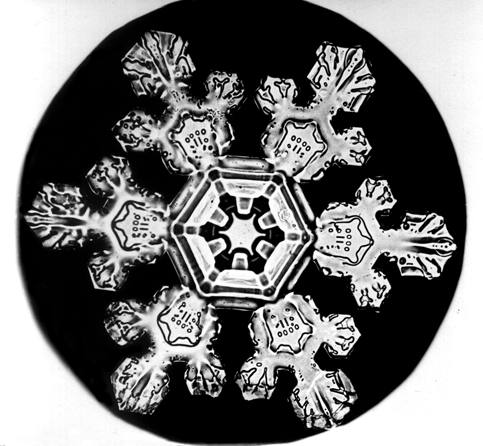
Bentley Snowflake11.jpgAlthough some winter holidays, like Hannukah, have already come and gone, over the next few days, there will likely be many people scrambling to find last minute gifts for friends and family. If you’ve waited until the last minute, or have had a hard time thinking of what to give someone on your list who has all they need, this list of “gifts for the greater good” might be just what you need. Note that links and companies mentioned in this post are for informational purposes only, and should not be construed as endorsements by ISTC or the University of Illinois.


It’s always a great gift idea to make a donation in honor of a loved one to an organization that has meaning to them. There are many organizations that allow you to make a donation toward something which will help lift other people out of hunger and poverty, and thus foster the social and economic aspects of sustainability. Heifer International is one of the more visible of such organizations. Heifer conducts projects in countries throughout the world–including the U.S. in areas of low income. See http://www.heifer.org/ending-hunger/our-work/index.html for their complete list of projects. Their gift catalog allows you to provide a donation that will help wherever it is needed the most, or to foster specific projects. For example, you might fund, or help fund, provision of a goat to a family in need, which will help provide them with milk and cheese for their own consumption, and for sale to raise funds for food, shelter, and education that might not otherwise be affordable. Besides livestock-related donations, you might support the empowerment of women, sustainable farming, or the provision of basic needs (e.g. clean water). When you make a donation, you have the opportunity to send a gift card, via traditional or e-mail, to someone in whose honor you are making the donation. Such gifts raise awareness of important environmental and societal issues, and avoid potential problems that giving “stuff” that might entail (e.g. the wrong size, a duplicate of something already owned, etc.). Plus, it’s unique–how often are honeybees provided to someone in your honor? For more expensive options in their catalog, you can opt to fund a share of an item rather than the entire thing. Similar organizations, like Action Against Hunger, work to provide nutrition, food security, clean water and sanitation, and emergency response in various parts of the world. Though they don’t have the “card” set-up that Heifer does, you can check a box on their donation form to make it in someone’s honor, providing their email address so they can be notified of the gesture. You’ll find that many charities have similar provisions, so think about what cause would resonate most with your intended recipient. Perhaps they’d prefer to see hunger fought in their own community–check out Feeding America’s Find a Food Bank tool or Ample Harvest’s Find a Food Pantry tool to locate an organization closer to your recipient. America’s Charities provides an online search tool that allows you to find organizations focused on various causes throughout the United States.


If you’d like to have something to hand to your recipient, there are companies that provide useful items while putting a portion of their proceeds toward projects for the greater good. Check out Mitscoots Socks, for example. For every warm pair of socks or gloves, hat or scarf you buy, they give an equivalent item to someone in need (similar to TOMS shoes). Mitscoots also fosters sustainability by employing people transitioning out of homelessness. Another option is LifeStraw. This company makes a variety of filters, for individual, family, or community use, which remove virtually all the microbiological contaminants from water which make it unsafe to drink. These filters could be great to have on hand in case of emergency, or for camping or hiking. A portion of the proceeds from sales goes toward the purchase of LifeStraw Community purifiers which are distributed to schools in developing communities. So by giving someone you know a tool to ensure they’ll have clean water in an emergency, you’re helping ensure a child has access to clean water too.


Finally, you could give a gift of experience by making a commitment to your recipient that the two of you will do something together to make the world a little better for everyone. Perhaps you can volunteer together at a soup kitchen, or you could clean up litter in an area you both enjoy. If you both enjoy knitting, commit to spending time together to make items for those in need (see http://www.lionbrand.com/charityConnection.html to find a charity to which your items could be donated). Whatever your shared interest, you’ll enjoy time spent together while helping out in some small way.


These are just a few ideas to inspire you. ISTC wishes you and yours a happy holiday season.