Illinois recently became the 11th state to launch a paint stewardship program. Beginning December 1, 2025, residents can recycle leftover paint (both latex and oil-based), primers, stains, sealers, and varnishes conveniently, keeping these materials out of landfills.
Similar programs exist in California, Colorado, Connecticut, Maine, Minnesota, New York, Rhode Island, Oregon, Vermont, Washington state, and the District of Columbia. Maryland anticipates rolling out its paint stewardship program in 2026. According to the Product Stewardship Institute, U.S. residents generate more than 80 million gallons of leftover latex and oil-based paint each year. When dumped in the trash or down the drain, leftover paint can contaminate our environment with hazardous materials, but most paint is recyclable. Since 2010, paint EPR programs have recycled over 72% of collected latex paint nationwide and saved governments and taxpayers nearly $300 million.
There is no fee to drop off unused paint for recycling at participating locations. To find a drop-off location near you, visit https://www.paintcare.org/drop-off-sites/ and enter your zip code. All PaintCare sites accept up to 5 gallons per visit (some will accept more). Residents should call ahead to confirm business hours and whether the location can accept the type and amount of paint they would like to recycle. Sites do not accept aerosols (spray paint), leaking, unlabeled, or empty containers.
Image courtesy of the Illinois Product Stewardship Council
Beginning January 1, 2026, Illinois law requires battery manufacturers to fund battery collection for recycling, with no cost to the consumer. Batteries can NOT be recycled in your home recycling bin. They may only be recycled through special drop-off collection locations.
Why battery recycling matters
Batteries are made from metals and minerals mined using processes that are often damaging to the environment. When batteries are recycled, these materials can be captured and reused. This reduces the need for newly mined materials. In addition, certain battery chemistries are dangerous in the waste and household recycling streams. Many contain material that is toxic to the environment or may become a fire or explosion hazard in waste collection vehicles or waste processing facilities.
How do I participate?
Visit https://www.call2recycle.org/illinois/ to find a drop-off location near you. Enter your city or postal code and select the type of battery (rechargeable, single-use, medium format, or damaged/defective) you need to recycle to obtain a list of locations accepting those items.
Be aware that some facilities may take your used batteries in bulk and mixed together. These facilities take the responsibility of packaging them safely for shipping to specialized recyclers. However, many facilities require residents to separate alkaline batteries from rechargeable batteries and will require you to properly protect battery terminals to reduce the risk of fire. This is done by covering battery terminals with clear packing tape (ideal), duct tape (acceptable), or electrical tape (acceptable), or by placing a single battery in very small, individual, clear plastic bag.
Image courtesy of the Illinois Product Stewardship Council
To learn more about batteries and their responsible use and disposal, visit the Illinois Product Stewardship Council website at www.illinoispsc.org/batteries.
Each morning, Monday through Friday, this blog provides an update on sustainability research and case studies from around the world, with a brief description and link to the source material. A wide variety of sustainability topics are covered, with an emphasis on areas of expertise and research interests of staff at the Illinois Sustainable Technology Center.
To clarify, the “Sustainability in the News” blog does not highlight research or projects conducted by ISTC; those types of updates are available via the ISTC Blog, the ISTC Newsletter (subscribe here), and the Technology Acceleration Program (TAP) Newsletter (subscribe here). Instead, the “Sustainability in the News” feed helps you learn about the issues that ISTC itself is monitoring. Consider it your daily dose of sustainability science inspiration!
To subscribe, visit https://blogs.illinois.edu/publicSubscribe?blogId=9341 and enter your email address. A confirmation email will be sent to you (there may be a short delay before you see it in your inbox). Click on the subscription confirmation link in that email, and you’re all set to receive daily email updates!
Questions or suggestions can be directed to Joy Scrogum.
Program flyer, courtesy of the Illinois Green Business Association.
The Illinois Green Business Association (IGBA) has partnered with Intuit, the maker of Quickbooks, and the Green Business Engagement National Network (GBENN) to offer energy efficiency and electrification project rebates up to $1,000 for 30 businesses or non-profit organizations in Illinois. Applications are due February 2, 2026.
Qualifying projects include LED lighting upgrades, EV charging stations, HVAC maintenance, smart thermostat installation, electric hot water heater replacements, walk-in cooler maintenance and/or strip curtains, purchasing electric bikes or vehicles…and many more.
To be eligible for this funding, your IL business or non-profit must:
Have 100 or fewer employees or have an annual revenue equal to and less than $3.5M.
Temperatures are dropping and many of us are once again doing our winter holiday shopping. Some people find generating gift ideas overwhelming in the best of times, and with rising costs, funding and workforce cuts, and other issues, this year may feel even more tumultuous. To help instill a sense of hygge (a Danish and Norwegian word related to comfort, content, and coziness), this post will focus on another northern tradition—the Icelandic Christmas Book Flood, also known as the Yule Book Flood or Jólabókaflóð.
Iceland has a rich literary history, and after World War II, like many other countries, it was rebuilding its economy and restricting imports. Paper was a commodity that remained relatively cheap, and there were fewer restrictions on paper-based products. So, books were more commonly imported items and thus became popular as Christmas gifts. The tradition of books as holiday gifts officially began in 1944 with the first publication of the Journal of Books (Bókatíðindi), an annual catalog of newly published books that is distributed to all Icelandic houses for free at the beginning of the holiday season (today it’s available online as well as being sent by post). The basic tradition includes the presentation of books as gifts on Christmas Eve, followed by settling down to read and enjoy drinks and snacks. According to Erika Ebsworth-Goold, “No matter how the books are doled out, once they’re opened, and favorites are selected, it’s time to settle and snuggle in for a nice, restful read that helps block out winter’s chill. There’s usually hot chocolate, jólabland (a curious Icelandic combination of brown ale and orange soda), other sweet treats, and a calming sense of quiet, reserved togetherness. It’s tough to imagine anything more peaceful or perfect.”
If you’d like to try out this cozy-sounding tradition, the following books related to sustainability issues might be suitable gifts for loved ones or additions to your own wish list. Both non-fiction and fiction titles are included. This list is by no means exhaustive, and additional resources are offered to guide further exploration of sustainability-related titles.
And while we’re on the subject of books, it should be noted that ISTC’s Sustainability Information Curator and librarian extraordinaire, Laura Barnes, is preparing to retire at the end of December 2025 after 34 years of service. If you’ve had the chance to work with Laura, you may want to contact her and wish her well. Cheers, Laura!
As always, links, companies, or products included in this post are for informational purposes only and should not be construed as endorsements by ISTC, the Prairie Research Institute, or the University of Illinois. Happy holidays!
What if We Get it Right? Visions of Climate Futures by Ayana Elizabeth Johnson. “Sometimes the bravest thing we can do while facing an existential crisis is imagine life on the other side…With clear-eyed essays, vibrant interviews, data, poetry, and art, Ayana guides us through solutions and possibilities at the nexus of science, policy, culture, and justice.”
The Problem with Plastic: How We Can Save Ourselves and Our Planet Before It’s Too Late by Judith Enck and Adam Mahoney. “The Problem with Plastic critically examines the paradox of this material, first celebrated for its innovations and now recognized for its devastating environmental and public health impacts…the book reveals how plastic pollution contributes to poisoned oceans, polluted air, a warming planet, and overwhelming waste, disproportionately impacting marginalized communities who bear the brunt of petrochemical pollution.”
Composting for a New Generation: Latest Techniques for the Bin and Beyond by Michelle Balz explains the science behind compost, provides tips for using compost, and explores techniques including traditional bin composting (with DIY instructions for building your own bin), vermicomposting, using black soldier fly larvae, keyhole gardens, and trench composting.
The Zero-Waste Chef: Plant Forward Recipes and Tips for a Sustainable Kitchen and Planet by Anne-Marie Bonneau. The popular blogger turned author says ‘In my decade of living with as little plastic, food waste, and stuff as possible, I’ve learned that “zero-waste” is above all an intention, not a hard-and-fast rule. Because, while one person eliminating all their waste is great, if thousands of people do 20 percent better it will have a much bigger impact on the planet. The good news is you likely already have all the tools you need to begin to create your own change at home, especially in the kitchen.’
Doughnut Economics: Seven Ways to Think Like a 21st-Century Economist by Kate Raworth. The author, an Oxford economist, explains a framework for creating a “safe and just space for humanity” between 12 social foundations (based upon the UN Sustainable Development Goals) and nine planetary boundaries which represent ecological limits beyond which the Earth’s environmental system may not be able to self-regulate. Her diagram of this framework resembles a doughnut, with an interior ring where humanity can thrive while maintaining planetary stability.
Fiction
All the Water in the World by Eiren Caffall. “In the years after the glaciers melt, Nonie, her older sister and her parents and their researcher friends have stayed behind in an almost deserted New York City, creating a settlement on the roof of the American Museum of Natural History. The rule: Take from the exhibits only in dire need. They hunt and grow their food in Central Park as they work to save the collections of human history and science. When a superstorm breaches the city’s flood walls, Nonie and her family must escape north on the Hudson. They carry with them a book that holds their records of the lost collections…they encounter communities that have adapted in very different and sometimes frightening ways to the new reality. But they are determined to find a way to make a new world that honors all they’ve saved.” Note that this and the next book listed are examples of “climate fiction,” also known as “cli-fi.”
Memory of Water by Emmi Itäranta. “The world is a landscape of drought and risen seas. A military regime controls the remaining freshwater resources with an iron grip. In the far north, seventeen-year-old Noria Kaitio is the last in the long line of tea masters. She must soon take responsibility for a secret carefully guarded by her predecessors: her family has been caring for a hidden freshwater spring for generations. As the army turns its attention towards the tea master’s house, Noria learns that knowledge and power are irrevocably connected – and that her choices will determine the fate of everyone she loves.”
How Beautiful We Were by Imbolo Mbue. “Set in the fictional African village of Kosawa, it tells of a people living in fear amid environmental degradation wrought by an American oil company. Pipeline spills have rendered farmlands infertile. Children are dying from drinking toxic water. Promises of cleanup and financial reparations to the villagers are made—and ignored. The country’s government, led by a brazen dictator, exists to serve its own interests. Left with few choices, the people of Kosawa decide to fight back. Their struggle will last for decades and come at a steep price.”
Sunvault: Stories of Solarpunk and Eco-Speculationedited by Phoebe Wagner and Brontë Christopher Wieland is an anthology of short stories, artwork, and poetry from the “solarpunk” genre. According to Wikipedia, the genre “works to address how the future might look if humanity succeeded in solving major contemporary challenges with an emphasis on sustainability, human impact on the environment, and addressing climate change and pollution.” The publisher’s description says the book “focuses on the stories of those inhabiting the crucial moments when great change can be made by people with the right tools; stories of people living during tipping points, and the spaces before and after them; and stories of those who fight to effect change and seek solutions to ecological disruption.”
108: An Eco-Thrillerby Dheepa R. Maturi. “While working the night shift at a San Francisco news agency, Bayla Jeevan has a shocking out-of-body experience. Her consciousness is transported deep into an Indian forest, where she witnesses a noxious liquid spreading through the soil. At the same time, she receives a message from her father, presumed dead for fifteen years, warning her of imminent danger. Coincidence? Unlikely. Halfway around the world, agrochemical corporation ZedChem-led by billionaire Krakun Zed-tests its latest innovation, a product heralded as the solution to topsoil erosion. But the data reveals something else entirely…In this action-packed eco-thriller, the bonds of family-and the power to save Earth-are put to the test.”
Cast Away: Poems for Our Timeby Naomi Shihab Nye. “Acclaimed poet and Young People’s Poet Laureate Naomi Shihab Nye shines a spotlight on the things we cast away, from plastic water bottles to those less fortunate, in this collection of more than eighty original and never-before-published poems…With poems about food wrappers, lost mittens, plastic straws, refugee children, trashy talk, the environment, connection, community, responsibility to the planet, politics, immigration, time, junk mail, trash collectors, garbage trucks, all that we carry and all that we discard, this is a rich, engaging, moving, and sometimes humorous collection for readers ages twelve to adult.”
Additional resources
Environmental Novels. This University of Illinois LibGuide compiled by Laura Barnes, Lauren Bordson Dodge, and Charlotte Roh serves as a guide to juvenile, young adult, and adult novels with environmental themes, generally focused on pollution and climate change. It also highlights environmental book awards to help you keep abreast of new and notable titles.
Dragonfly.eco. Curated by Mary Woodbury, this site ‘explores the wild, crazy, and breathtaking literary trail of eco-fiction, with a large book database, spotlights, interviews, and more. Our motto is “blowing your mind with wild words and worlds.”’
These previous ISTC blog posts may provide some inspiration for the non-readers on your list. Please note that due to the age of these posts, some links included in them may no longer be available.
The Center for Economic Impacts & Societal Benefits (CEISB) at the Illinois Sustainable Technology Center (ISTC) has released a Pollution Prevention Guide for companies wanting to learn about using pollution prevention industrial assessments. Simply put, pollution prevention, also known as P2, refers to the reduction or elimination of hazardous materials and contaminants (pollution) at their source, prior to creation or release into the environment. The recently published guide is designed both for those who are new to P2 and those who have basic knowledge of P2 industrial assessments to help them move forward with P2 assessments in their facilities.
The guide was produced as part of the Collaborative Training & Assessments in Pollution Prevention (CTAP2) project, which assisted IL manufacturers in developing the skills needed to reap the rewards of incorporating sustainability into their business model. The guidebook includes information on how to plan and conduct assessments, including tips for forming pollution prevention teams; how to collect data to calculate baselines and progress toward goals; identification of common P2 opportunities and methods to evaluate and prioritize opportunities for implementation; and suggestions for incorporating continuous improvement in company culture. Participating facilities were also given access to short video modules to help communicate the basic tenets of P2 to internal teams. In addition to the guidebook, which lays the foundation for applying P2 principles in an industrial setting, an online Zotero library was also developed to provide more in-depth information related to various industrial sectors (e.g., aerospace, automotive, chemical, food & beverage, and metals manufacturing) and topics (e.g., hazardous materials, housekeeping, energy, water, green products, financing, etc.). The Zotero library also includes compilations of relevant case studies and ISTC publications.
Participating facilities represented the following manufacturing sectors: ball & roller bearings (fabricated metal products); cheese; paints & coatings; soap & other detergents; and pumps & pumping equipment. Funding for the project was provided by the U.S. Environmental Protection Agency (EPA).
CEISB technical assistance providers currently have federal funding toprovide P2 assistance at no cost to certain industrial or market sectors. See the following brief descriptions and links to project flyers:
Advancing Beverage Resilience through Pollution Prevention. This collaboration with EnergySense Resilience Center supports breweries, wineries, distilleries, and other craft beverage businesses across the state of Illinois. Following their assessments, participants will also have the chance to assist in shaping the certification process for green beverage manufacturing in Illinois and to be recognized for their sustainability efforts through the Illinois Green Business Program.
Mississippi River Corridor Pollution Prevention. ISTC staff are working with partners at the Iowa Department of Natural Resources Office of Pollution Prevention Services and Missouri State University to provide free industrial sustainability assessments across three states.
Pollution Prevention at Food Focused Businesses within DuPage & Kane Counties. Another collaboration with EnergySense Resilience Center, this project is providing free technical assistance to 10 small for and/or non-profit entities, such as restaurants, grocers, and other food-focused businesses and organizations in DuPage and Kane Counties. By getting assessed, businesses can lower operational costs, reduce wasted food & resources, and attract environmentally conscious customers.
Don’t see your sector or organization reflected in the projects listed above? The CEISB team may still be able to assist you through other funding sources or fee-for-service work. Contact CEISB at istc-info@illinois.edu or fill out the online site visit request form.
The following tools and resources will help you reduce food waste associated with your holiday celebrations and hopefully help you establish new habits to prevent food waste year-round. As always, please keep in mind that links to specific products or services are provided for informational purposes only and do not constitute endorsement by ISTC, the Prairie Research Institute, or the University of Illinois.
Meal planning
The Guest-imator from the Natural Resources Defense Council (NRDC) Save the Food website is an interactive calculator to help determine the right amount of food to prepare for a party. You can enter the number of guests based on whether they’re light, average, or big eaters, and even factor in how many leftover meals you’d like when the party’s over. That’s great if you’re the type of person who likes to cook extra food for holiday gatherings so you can send home care packages of leftovers with your guests. You can then choose the style of meal (vegetarian, classic dinner party, or a little of everything smorgasbord), input details on the types of entrees, sides, and desserts you want to get measurements such as the number of pounds of meat to prepare, the ounces of veggies to cook for sides, the number of pies to makes, etc. based on the parameters you’ve entered. Note that for whatever reason, clicking on “Finalize the menu” button does nothing (regardless of the browser you’re using); however, once you’re at the point to add or subtract mains, sides, and desserts, the measurements you’ll need will update on the table graphic at the top of the page with each addition or subtraction. Just scroll back up to see the new information.
Utah State University Extension—Meal Planning. This website guides you through the process of assessing what you already have in your pantry, thinking about your meals for the week, and creating a grocery list. It also includes free printable templates for planning nutritious meals and creating relevant shopping lists, and describes free meal planning apps for your phone to make planning simpler.
Proper storage & food safety
Store It. A key strategy for preventing food waste is storing your ingredients and leftovers properly to keep them viable for as long as possible. This section of the NRDC Save the Food website provides information on how to store a wide variety of foods, including when and how to refrigerate, how to freeze, and tips for using up the last bits of a given ingredient.
FoodSafety.gov (U.S. Department of Health & Human Services). In particular, check out the Cold Food Storage Chart and the FoodKeeper App to learn about proper storage of different foods and ingredients. The FoodKeeper App is also available for Android and Apple mobile devices. Further, this website provides resources for keeping food safe by event and season. Following these guidelines can help prevent food waste caused by improper preparation or storage practices. Explore the downloadable guides for cooking for groups, guidance for parties and buffets, Thanksgiving and Winter Holidays, and more.
Sometimes the best strategy to prevent food waste is to find inspiration on how to use an ingredient in a new way, use up a surplus of a given item, or repurpose leftovers in a new dish. The following websites and tools will help you create meals based on what you have on hand.
The 5 Ways website suggests using canned beans as a substitute for half of the fats in baked goods like brownies and cookies to use them up and add protein to treats. Photo by Andrei Starostin – – stock.adobe.com (Education license, University of Illinois Urbana-Champaign).
5 Ways With Commonly Wasted Foods. This section of Canada’s Love Food Hate Waste website allows you explore new options for using various ingredients. Images of items are presented with a list of 5 different uses. Click on any image for details, which include links to specific recipes. You can also explore the “Recipes” section of the website to search for items you have on hand that might not be featured on the “5 Ways” page.
Food Hero. Another excellent resource from Oregon State University Extension, this site provides a database of recipes, resources to help celebrate the food of different cultures, gardening tips, and other guidance to support a healthy lifestyle. You can search their resources by ingredient to find recipes, videos, and other inspiration for items in your pantry or fridge.
Of course, you can always just perform an Internet search for your available ingredients, but you might be overwhelmed by the number of search results. Check out these additional recipe database sites to help you find what you’re looking for more easily. Many of these are also available as apps for your phone.
Supercook. Use the dropdown menus to select multiple ingredients at a time.
MyFridgeFood. If you’re a creative chef, this site not only allows you to search for recipes based on what you have, but also to submit recipe ideas to assist others.
Cookpad. Similarly, you can search and share your own recipes. You can search without creating a free account, but need one to submit recipes.
Cookin’ With Google. This is a Google Customized Search engine that lets you input multiple ingredients and find relevant recipes.
Use Up Leftovers. Enter three ingredients and get results from a database of over a million recipes. Don’t worry about being overwhelmed; the results will consist of the five best matches from the database.
Happy holidays and good luck whittling down your food waste!
In a previous post on back-to-school sustainability resources, the Illinois Climate Education Hub was mentioned as a forthcoming resource for K-12 teachers, to assist them in complying with Public Act 103-0837. That legislation provides that, “Beginning with the 2026-2027 school year, every public school shall provide instruction on climate change, which shall include, but not be limited to, identifying the environmental and ecological impacts of climate change on individuals and communities and evaluating solutions for addressing and mitigating the impact of climate change and shall be in alignment with State learning standards, as appropriate. The State Board of Education shall, subject to appropriation, prepare and make available multi-disciplinary instructional resources and professional learning opportunities for educators that may be used to meet the requirements of this subsection.”
The hub is now live and is available at https://illinoisclimateeducation.org/. The IL hub (like its sister hubs in New Jersey, Oregon, Wisconsin, Maine, New York, Connecticut, and Michigan) provides free, educator-vetted teaching resources, professional development opportunities, lesson plan examples, and relevant news articles for students. All resources on the hub can be used for educational purposes with proper attribution to the content provider.
Every October, colleges and universities around the world celebrate Campus Sustainability Month. According to the Association for the Advancement of Sustainability in Higher Education (AASHE), the goal of Campus Sustainability Month is “to raise the visibility of campus sustainability and provide campus sustainability advocates with a platform through which to deepen campus engagement around sustainability. It provides an excellent opportunity to recruit new leaders and set goals for the rest of the year. It serves as a complement to Earth Day, which is held each year in April, and is often a time for celebration and recognition of the good work that took place over the course of the academic year.”
The following resources will help members of the University of Illinois Urbana-Champaign campus community learn more about and contribute to sustainability efforts on campus. This list is extensive but not exhaustive. You’re encouraged to explore websites referenced below for further information or reach out to the Institute for Sustainability, Energy, and Environment (iSEE) at sustainability@illinois.edu with questions.
Staff members of the Prairie Research Institute (PRI), including the PRI Office of the Executive Director and the five State Scientific Surveys, can join the PRI Sustainability Microsoft Team to share resources, ask questions, and collaborate on solutions. Open the Teams app on your work computer and search for “PRI Sustainability” or contact Joy Scrogum to join. Staff from the Urbana campus Facilities & Services (F&S) unit, including the campus zero waste coordinator, also participate in this group.
Illinois Climate Action Plan (iCAP). This plan, updated every five years, represents the university’s commitment to environmental stewardship and outlines strategies that are being pursued to reach carbon neutrality as soon as possible (no later than 2050). Objectives relate to energy, transportation, land and water, zero waste, education, engagement, resilience, and implementation. The latest edition of the iCAP was published in 2020 (which means a revision is currently underway). Check out the 2020 iCAP athttps://icap.sustainability.illinois.edu/files/project/5293/iCAP-2020-FINAL-WEB.pdf.
Progress toward iCAP goals involves detailed analysis, research, and formulation of recommendations by topical iCAP teams (previously referred to as Sustainability Working Advisory Teams, or SWATs) comprised of faculty, staff, and student members. Topics covered by these teams roughly correspond to iCAP objectives and include Education, Energy, Transportation, Land & Water, Zero Waste, and Engagement. Interested staff, faculty, and students can reach out to team chairs (listed as “Project Leaders” on the team pages) to express interest in joining topical teams. All recommendations made by iCAP topical teams are available on the iCAP Portal (described below).
Recommendations made by the topical teams are then considered by the iCAP Working Group, a committee of mid-level administrators as well as students, staff, and faculty members, which evaluates and routes them to appropriate campus units or to the Sustainability Council for further evaluation and implementation. The Sustainability Council is chaired by the Chancellor, vice-chaired by the Director of the iSEE, and is composed of campus decision makers at the highest level. The flowchart below illustrates the process of progress toward iCAP objectives.
Illustration of the iCAP recommendation and approval process from the iCAP Portal.
The iCAP Portal: Launched in 2012, this is an online repository of information on various sustainability efforts across campus, including past projects, those currently underway, and those in the planning stages. The iCAP Portal features updates, historical context, metrics, and contact information for all current and past iCAP projects. Project descriptions are organized into10 themes on the portal: Energy, Transportation, Land and Water, Zero Waste, Resilience, Reporting Progress, Engagement, Education, Research Opportunities, and Funding. Aproject’s status may be listed as Proposed (prior to approval), In Progress (projects actively being implemented), Ongoing (for projects running on their own, or for summaries of overarching efforts with multiple subprojects), Completed, or even Cancelled (for efforts that didn’t work out or ceased for some reason). The “Objectives Dashboard” can help portal users find updates and track progress toward the various objectives outlined in the current iCAP.
The iCAP Portal is a massive resource, and it contains a wealth of information about campus sustainability efforts, though many campus community members remain unaware of this repository. Content maintenance and portal design are led by Facilities & Services (F&S), iSEE, and the College of Education’s Office for Math, Science, and Technology Education (MSTE). Other contributors include the iCAP Working Group and topical iCAP teams (and associated student clerk and interns), under iSEE’s direction, as well as the Student Sustainability Committee (described below under “Student Organizations”). As you can imagine, keeping this type of extensive record up to date takes a lot of time and effort. The various projects the portal outlines are contributed to by students, faculty, and staff, which are all populations comprised of busy people with varying degrees of turnover. As a result, you may occasionally find outdated information (e.g., old contact names) or a lack of recent project updates on the portal. So, if you happen to have knowledge of a project and/or are browsing the iCAP Portal and see something that needs to be updated, use the online “Suggestions” form to inform the team working on portal maintenance. That same form can also be used to suggest ideas for new projects (after checking the list of existing projects, categorized by topic).
Green Guide: Published in spring 2025 through a collaboration of F&S, iSEE, and Student Affairs, this document is designed to highlight opportunities for campus sustainability engagement. It overlaps with much of the information provided below, while providing a few specific examples of student organizations, cultural and resource centers, key campus programs, relevant facilities that you can tour, and tips for sustainable behaviors for individuals to pursue.
Student Sustainability Home Page: This section of the Urbana campus Student Affairs website is the gateway to student engagement in campus sustainability efforts. Included are subsections on the following:
Student Sustainability Committee (SSC) and the Illinois Green Fund (IGF). The IGF is North America’s largest university sustainability funding pool, financed by two student-initiated fees, the Cleaner Energy Technologies Fee (CETF) and the Sustainable Campus Environment Fee (SCEF). The SSC is a student-led university funding board charged with distributing IGF funds. Working with staff and faculty advisers, the SSC allocates $1.5 million annually toward the development and seed funding of projects that have an environmental impact on the university community.
Student Organizations. There are over 1,000 Registered Student Organizations (RSOs) related to sustainability or environmental issues on the Urbana campus. A comprehensive list is available online. A few examples include:
ActGreen, which is focused on sustainable business.
Student Sustainability Leadership Council (SSLC). This group serves as a hub to facilitate collaboration and communication between student groups, administration, and community members; spearhead and assist educational programming; and advocate for students’ campus sustainability concerns.
Sustainability Training Videos: These videos can help individuals understand how they might contribute to the iCAP objectives. Different videos are available for students, faculty and researchers, and for other staff members, administrators, and community members. Links to surveys are available for viewers to provide feedback on what campus is doing right and what needs to be prioritized moving forward.
Greener Campus Certification Programs: Did you know that your office, sorority or fraternity chapter, or your campus event could receive recognition for the implementation of simple, inexpensive sustainable actions? This section of the iSEE website outlines the campus green certification programs and how to participate.
Sustainability research on campus. Each year, iSEE calls for proposals to provide seed money for faculty-led teams to engage with interdisciplinary sustainability issues on campus or in neighboring communities as part of theCampus as a Living Lab research program. The goal is to leverage this seed money to attract external funds for research relevant to achieve the iCAP objectives. Check out the link above to learn about previously funded projects and watch that space for information on calls for proposals.
Sustainability Education Opportunities: Finally, be sure to check out this section of the iSEE website for more information on sustainability education opportunities on the Urbana campus. These web pages offer a wealth of information on sustainability-related fellowships, certificates, and programs (including courses, majors and minors) that students can pursue.
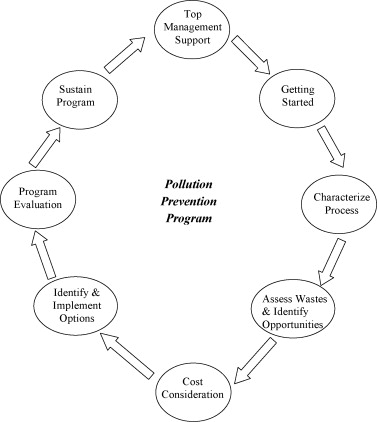
The third week of September annually is celebrated as Pollution Prevention, or P2, Week. P2 Week 2025 is September 15-21 using the theme: “40 Years of Pollution Prevention: Honoring the Past, Protecting the Future!”
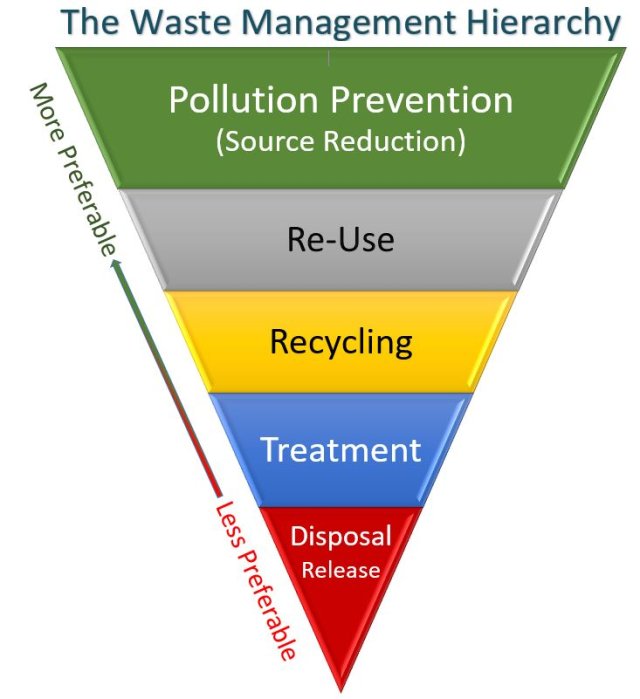
As defined by the National Pollution Prevention Roundtable (NPPR, emphasis added), “Pollution is the contamination of air, soil, or water by the discharge of harmful substances. Pollution prevention is the reduction or elimination of pollution at the source (source reduction) instead of at the end-of-the-pipe or stack. Pollution prevention occurs when raw materials, water, energy and other resources are utilized more efficiently, when less harmful substances are substituted for hazardous ones, and when toxic substances are eliminated from the production process. By reducing the use and production of hazardous substances, and by operating more efficiently we protect human health, strengthen our economic well-being, and preserve the environment.”
Rather than being a burden on industry, NPPR points out that “Adopting pollution prevention practices and techniques often benefits industry by lowering a company’s operational and environmental compliance costs. By preventing the generation of waste, P2 can also reduce or eliminate long-term liabilities and clean-up costs. Furthermore, disposal costs are reduced when the volume of waste is decreased. This can also lead to a reduction in workplace exposures to hazardous materials which can affect workers’ health and hence, their productivity. If less waste is produced, there will also be a diminished need for on-site storage space. Furthermore, by preventing pollution there will be a greater likelihood that a company will be in compliance with local, state, and federal compliance statutes. Finally, as community pillars, businesses shoulder an important responsibility for protecting the environment and natural resources for their own good as well as that of society.”
In 1990, Congress passed the Pollution Prevention Act (P2Act), which states “The Environmental Protection Agency must establish a source reduction program which collects and disseminates information, provides financial assistance to States, and implements the other activities….”
The technical assistance experts within ISTC’s Center for Economic Impacts and Societal Benefits (CEISB) help businesses, organizations, institutions, and government agencies throughout Illinois and beyond prevent pollution and use resources more efficiently. This benefits our shared environment while also ensuring that companies and communities are more competitive and resilient.
CEISB technical assistance providers currently have federal funding toprovide P2 assistance at no cost to certain industrial or market sectors. See the following brief descriptions and links to project flyers:
Advancing Beverage Resilience through Pollution Prevention. This collaboration with EnergySense Resilience Center supports breweries, wineries, distilleries, and other craft beverage businesses across the state of Illinois. Following their assessments, participants will also have the chance to assist in shaping the certification process for green beverage manufacturing in Illinois and to be recognized for their sustainability efforts through the Illinois Green Business Program.
Mississippi River Corridor Pollution Prevention. ISTC staff are working with partners at the Iowa Department of Natural Resources Office of Pollution Prevention Services and Missouri State University to provide free industrial sustainability assessments across three states.
Pollution Prevention at Food Focused Businesses within DuPage & Kane Counties. Another collaboration with EnergySense Resilience Center, this project is providing free technical assistance to 10 small for and/or non-profit entities, such as restaurants, grocers, and other food-focused businesses and organizations in DuPage and Kane Counties. By getting assessed, businesses can lower operational costs, reduce wasted food & resources, and attract environmentally conscious customers.
Don’t see your sector or organization reflected in the projects listed above? Our team may still be able to assist you through other funding sources or fee-for-service work. Contact us at istc-info@illinois.edu or fill out our online site visit request form.
Pollution Prevention 101 LibGuide. Curated by ISTC for the University of Illinois Urbana-Champaign library, this online guide provides the basics for technical assistance providers new to the field.